Stone and Brick Cladding Care and Cleaning: What to Know
How to clean cultured stone and brick cladding: methods for interiors, kitchens, fireplaces and façades, products to avoid, and what to know about protective sealers.

One of the most appreciated things about stone and brick cladding is how little maintenance it needs. Still, knowing the right cleaning methods and avoiding a few mistakes keeps it looking as good as new for years. Here are general recommendations for caring for cultured stone and cultured brick.
The golden rule: start with the gentlest method
Stone and brick cladding has a porous, textured surface, so always start with the gentlest cleaning method and step up only if needed. Testing any new product on a small hidden area first is a good habit.
Routine care indoors
- Dusting: dust regularly with a soft brush, a duster or the brush attachment of a vacuum cleaner.
- Light dirt: clean water with a soft brush or damp cloth is enough.
- Stubborn marks: add a little neutral (pH-balanced) cleaner to water, scrub gently with a soft brush and rinse with plenty of clean water.
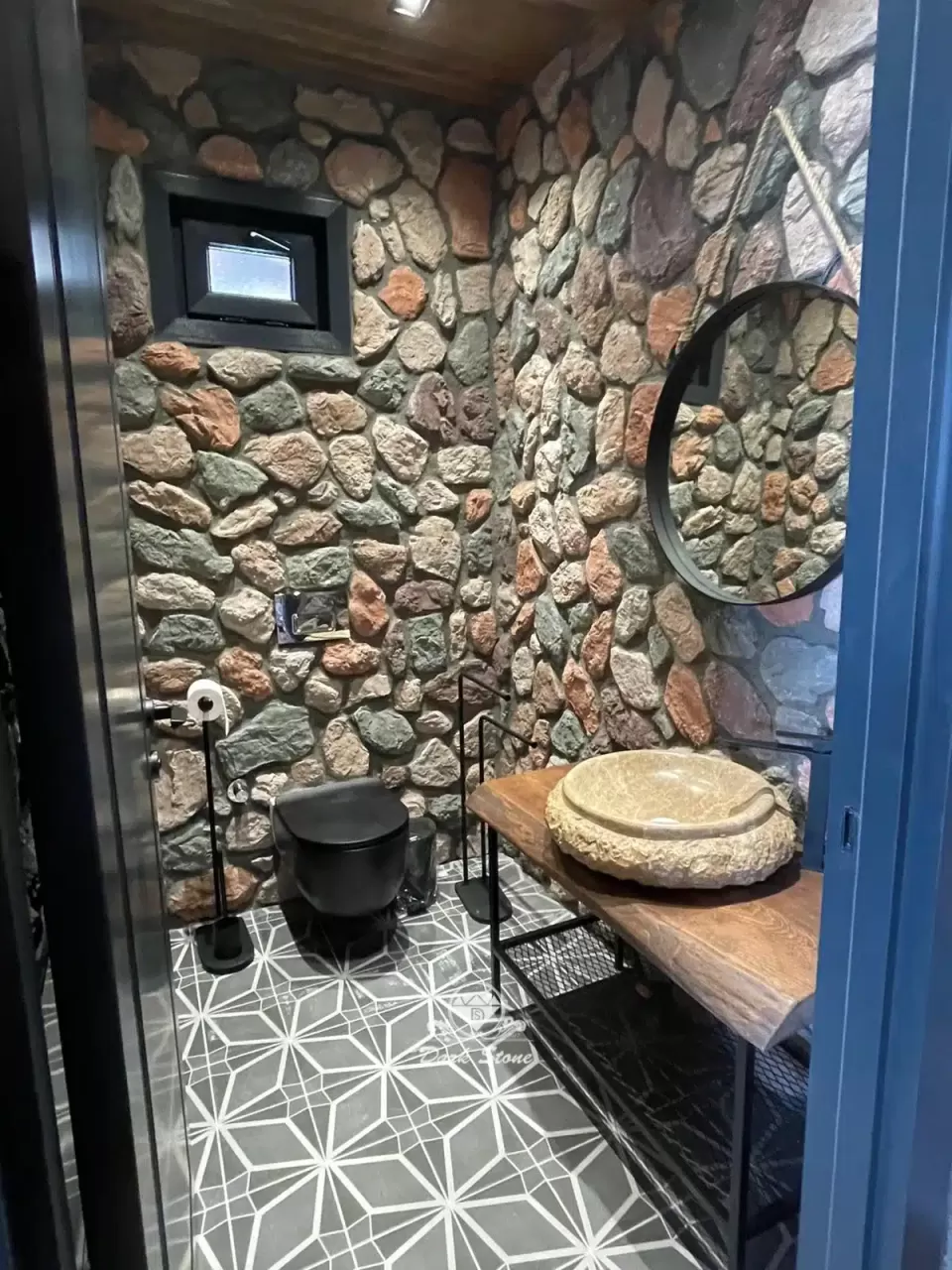
What to avoid
- Acidic cleaners: descalers and acid-based products can damage the surface and colour.
- Bleach and solvents: can cause discolouration and staining.
- Wire brushes and abrasives: scratch the texture and can wear away colour.
- High-pressure washing: especially at close range, it can damage the surface and joints. If needed, use low pressure from a distance.
Brick and stone in the kitchen
Grease and steam are the main issues in kitchens. Clean grease marks promptly with warm water, a neutral cleaner and a soft cloth. Behind the hob, a protective sealer or an easy-wipe glass panel makes cleaning easier. See kitchen backsplash brick for details.
Soot around fireplaces
Soot and smoke can build up on fireplace stone over time. First remove loose soot with a dry soft brush, then clean gently with water and a neutral cleaner, dabbing rather than rubbing to avoid spreading it. Only clean once the fireplace has fully cooled. For design ideas, see fireplace stone cladding.
Façade care
Façades can collect dirt, dust, moss and white deposits (efflorescence).
- Dust and dirt: rinse from top to bottom with a low-pressure garden hose, using a soft brush if needed.
- Moss and mould: can appear in shady, damp areas. Clean with a soft brush and a suitable cleaner, and fix the source of moisture (gutters, drip edges, ground contact).
- White deposits (efflorescence): in cement-based materials, moisture can carry salts to the surface. They can usually be brushed off dry; if they keep returning, investigate the source of moisture. Consult your installer before using acidic products.
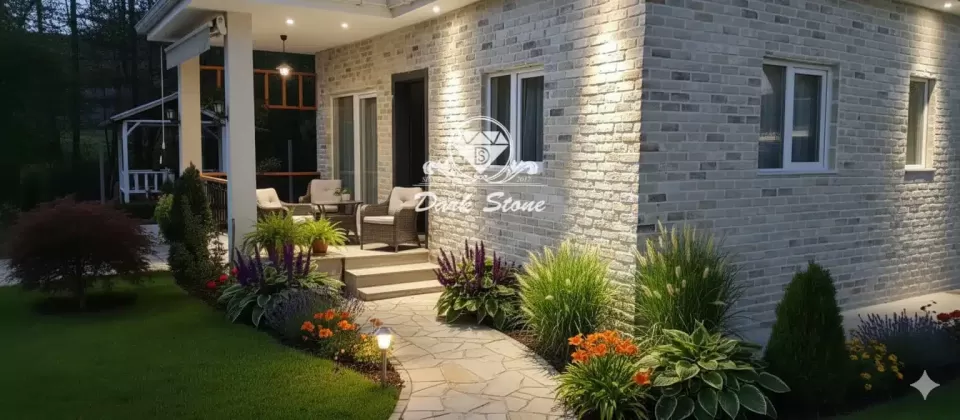
Is a protective sealer necessary?
Sealers penetrate the pores of the stone and reduce water absorption and staining. They can be useful on façades and in kitchens, cafés and restaurants. Choose breathable (vapour-permeable) products that do not form a glossy film or change the colour. Ask your installer about suitability, timing and reapplication, and test on a small area first.
Damage and repair
A piece broken by impact can be replaced with a new piece of the same model and colour — one of the advantages of cultured stone is that the same colour can be reordered. We recommend keeping a few spare pieces after installation and noting your product code (e.g. DS 811) so the right colour is easy to find later.
Quick care checklist
- Dust regularly with a soft brush.
- Clean marks promptly with water and a neutral cleaner.
- Avoid acid, bleach, wire brushes and high pressure.
- Check moisture sources on façades (gutters, drip edges, ground contact).
- Consider a sealer in high-traffic areas.
- Keep a few spare pieces and your product code.
For questions about our products see our FAQ or contact us. For installation, read how to install cultured stone.
Frequently asked questions
How do I clean stone cladding?
Dust regularly with a soft brush; clean marks with water, a neutral cleaner and a soft brush. Avoid acidic and abrasive products.
Can I use bleach on stone cladding?
It is not recommended — bleach and similar strong chemicals can cause discolouration.
Can stone cladding be pressure-washed?
High-pressure, close-range washing can damage the surface and joints. On façades, use a low-pressure hose and a soft brush.